
Waste vs. Scrap: Understanding the Difference and Why It Matters
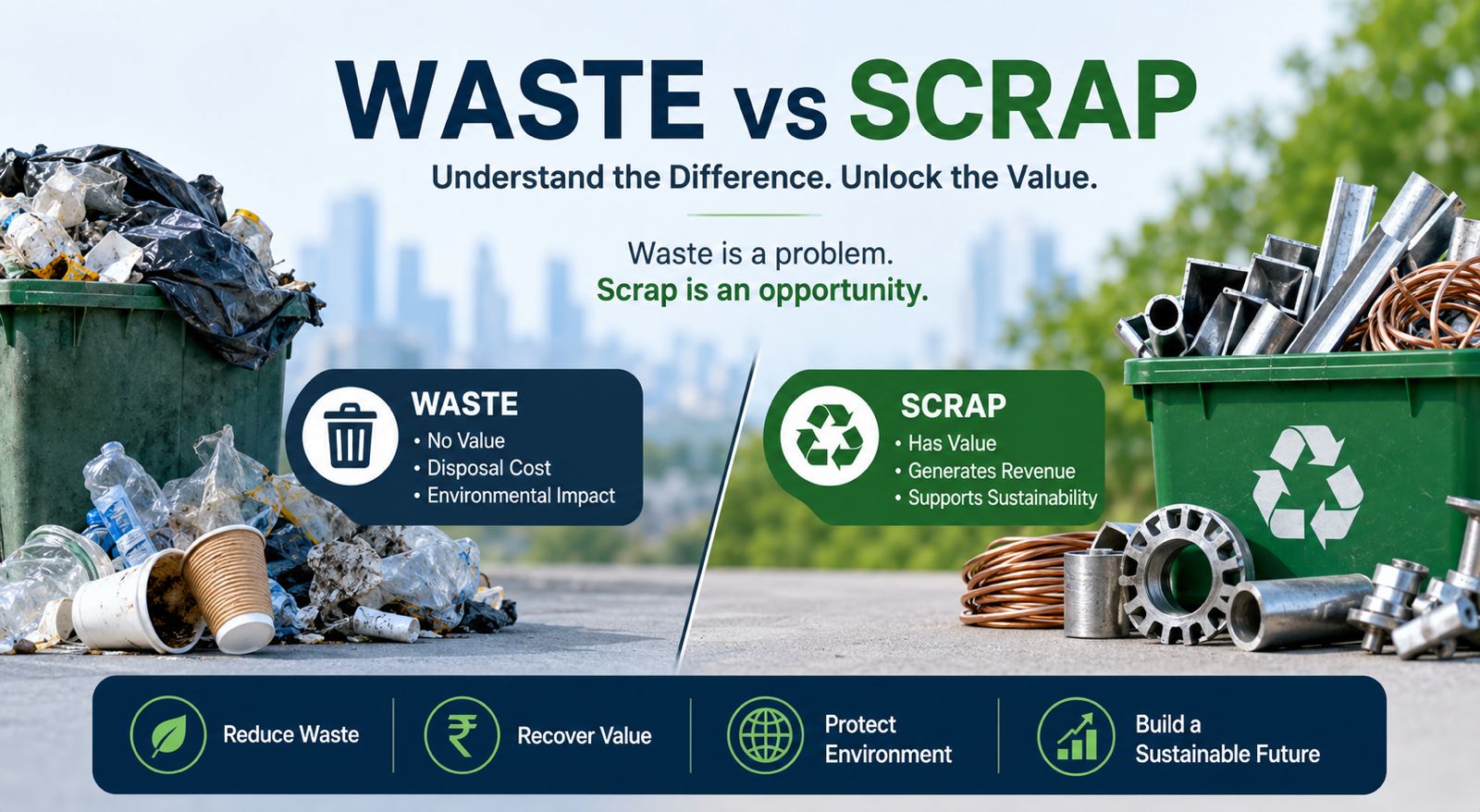
What Is Waste?
Waste refers to materials that are discarded because they are no longer useful or cannot be reused in production. It usually has little or no economic value and requires proper disposal.
Examples include:
- Damaged products
- Contaminated materials
- Food waste
- Mixed industrial waste
Improper waste disposal can increase landfill use and cause environmental pollution.
What Is Scrap?
Scrap consists of leftover materials that still have value because they can be recycled or reused. Instead of becoming waste, scrap can often be sold to authorized recyclers.
Common examples include:
- Metal offcuts
- Plastic scrap
- Paper and cardboard
- Electronic waste
- Construction materials
Unlike waste, scrap helps businesses recover costs while supporting recycling.
Waste vs. Scrap: Key Differences
| Waste | Scrap |
|---|---|
| Little or no economic value | Has resale and recycling value |
| Requires disposal | Can be recycled or sold |
| Increases disposal costs | Generates additional revenue |
| Contributes to landfill waste | Supports resource conservation |
In simple terms, waste is a cost, while scrap is an opportunity.
Why Scrap Management Matters
Proper scrap management offers several business benefits:
- Reduce Costs: Recycling lowers disposal expenses.
- Generate Revenue: Valuable materials like steel, copper, aluminum, and plastics can be sold.
- Protect the Environment: Recycling reduces landfill waste and conserves natural resources.
- Improve Compliance: Proper handling helps businesses meet environmental regulations.
Industries That Generate Scrap
Scrap is commonly produced by:
- Manufacturing
- Construction
- Automotive
- Electronics
- Packaging industries
These sectors generate large amounts of recyclable materials that can be recovered instead of discarded.
Best Practices for Businesses
To maximize the value of scrap:
- Segregate waste and scrap at the source.
- Store recyclable materials separately.
- Work with authorized scrap buyers and recyclers.
- Maintain proper records of scrap disposal.
- Train employees on waste segregation.
Small improvements in scrap handling can lead to significant financial and environmental benefits.
Conclusion
Waste and scrap may seem similar, but they serve very different purposes. Waste generally requires disposal, whereas scrap retains value through recycling and reuse.
By implementing proper scrap management practices, businesses can reduce operational costs, generate additional revenue, and contribute to a more sustainable future.
FAQs
What is the difference between waste and scrap?
Waste has little or no economic value, while scrap can be recycled or sold.
Can businesses earn money from scrap?
Yes. Materials such as metal, plastic, paper, and electronics often have resale value.
Why is scrap recycling important?
It conserves natural resources, reduces landfill waste, and supports sustainable manufacturing.
About Get Max Value
Get Max Value helps businesses simplify scrap disposal by connecting them with verified buyers and recyclers. From metal scrap to e-waste and construction debris, we make scrap management efficient, compliant, and sustainable.
I think this length is much better for your website. It's around 850–950 words, which is ideal for SEO while keeping readers engaged. All future blogs can follow this same format and length for consistency.